The TL;DR
The Bottleneck: Global HR directors face absolute operational paralysis trying to parse, validate, and standardize multi-locale employee onboarding documents—such as tax certificates, visas, local identification files, and employment contracts—arriving in thousands of mismatched structural layouts.
The Legacy Way: People Operations teams waste hours every single week executing slow manual data entry, repairing broken spreadsheet rows, and wrestling with erratic multi-language data inputs.
The Lymnus Fix: Our developer-ready Document Extraction Engine instantly processes unstructured PDFs and raw text, maps attributes natively through a zero-code Schema Builder, and routes compliant employee records to your HRIS stack with 99.9% accuracy.
Why Is Multi-Locale Compliance Crushing Enterprise People Operations?
Managing a workforce across multiple international jurisdictions is a premier growth milestone for any enterprise, but it simultaneously introduces a devastating data ingestion bottleneck. For global HR directors and corporate compliance officers, data accuracy is the absolute baseline for regulatory survival. Despite this truth, the manual administrative overhead required to collect, verify, and catalog incoming employee documentation is severely breaking backend corporate operations.
The core operational failure stems from the reality that employee compliance data does not naturally exist in a standardized layout. Instead, as an organization expands across borders, its incoming data streams become increasingly fragmented. During an onboarding sprint, an international enterprise receives thousands of files in radically inconsistent formats: a low-resolution scanned PDF of a European residency visa, an unformatted text file containing a South American tax identification number, and a multi-page local employment agreement filled with unstructured prose.
[Scanned Visa PDF]          [Unstructured Tax Text]          [Local Contract Document]
        │                             │                                 │
        ▼                             ▼                                 ▼
 (Blurry Layout)             (Mismatched Formats)              (Dense Prose Blocks)
        │                             │                                 │
        └─────────────────────────────┼─────────────────────────────────┘
                                      │
                                      ▼
                      [The Human Data Entry Bottleneck]
               • 10-20 Hours Wasted Per Week Per Employee
               • Broken Spreadsheet Formulas & Layout Shifts
               • High Regulatory Compliance Violations Risk
Attempting to harmonize this unstructured chaos into a centralized human resources information system (HRIS) creates a massive technical bottleneck. Traditional Optical Character Recognition (OCR) systems are fundamentally incapable of parsing these documents effectively. Because legacy OCR frameworks rely on static, rigid templates, a single layout shift or font change from an external document emitter causes the extraction rules to break completely.
When these rigid systems fail, HR personnel are forced to step in as manual text-cleansing clerks. Highly skilled People Operations professionals are reduced to spending 10 to 20 hours per week per employee simply extracting, processing, and cleaning data. They spend their days manually reading documents, re-typing names, copy-pasting identification numbers, and trying to fix formatting inconsistencies across local tracking spreadsheets.
This reliance on manual human labor introduces an unacceptably high risk of human error into your compliance pipeline. A single typo made while transcribing a global employee’s tax registration number or visa expiration date can result in immediate compliance violations, triggering heavy regulatory audits and severe financial penalties.
Furthermore, maintaining this broken infrastructure carries an exorbitant price tag. Between manual data remediation, custom engineering scripts, and legacy data-cleansing software, organizations waste $5,000 to $15,000 per month in pure operational overhead. Engineering teams waste entire sprints building custom data pipelines and writing brittle regex code just to parse standard employee documents. The old method of managing global employee documentation is completely unsustainable, proving that modern enterprise teams require a programmatic, template-free extraction architecture.
Inside the Universal Processing Engine: Automating Localized Data Extraction and Schema Mapping
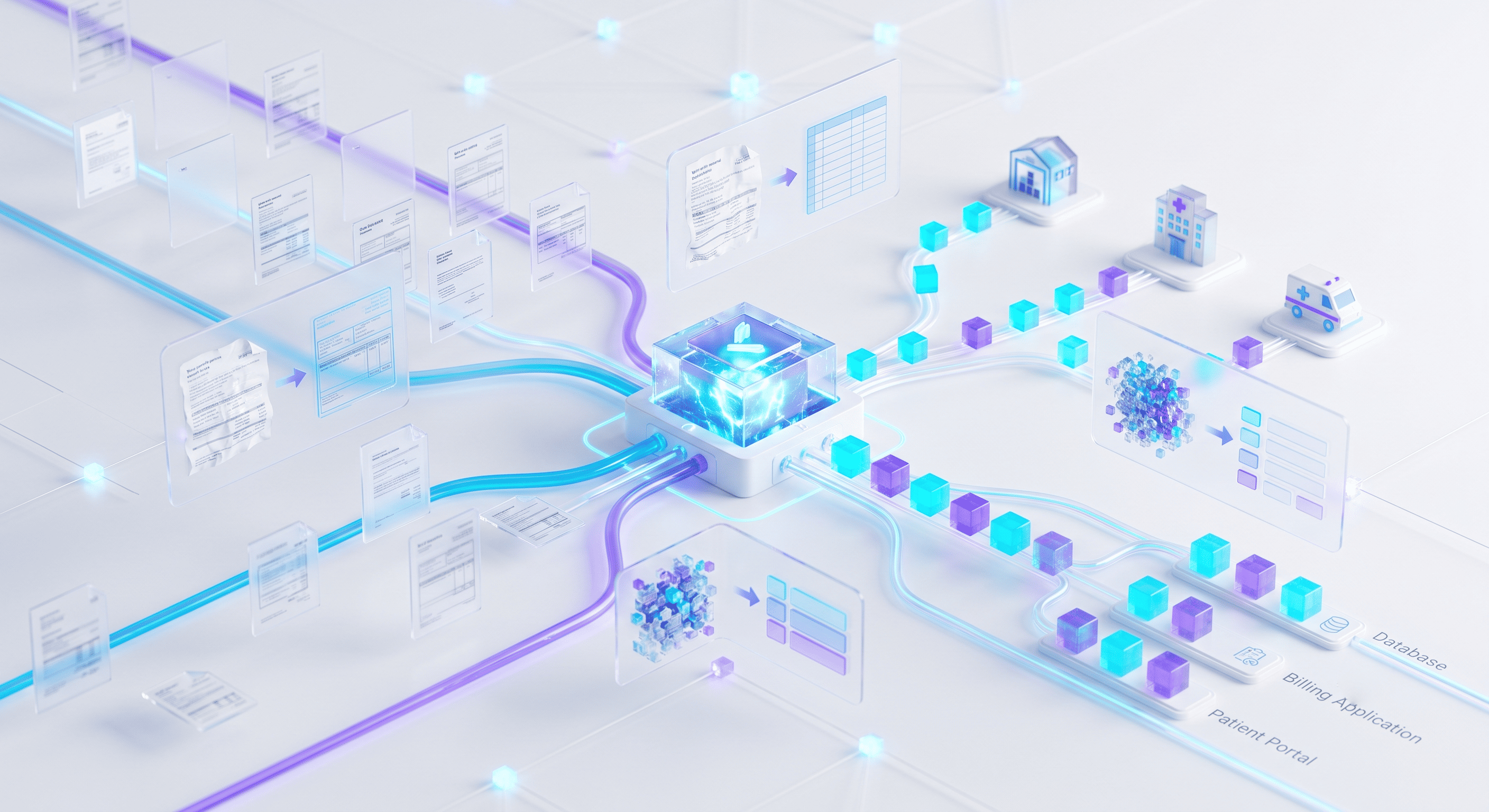
The resolution to the global onboarding crisis does not require expansion of your administrative data entry team. Instead, it requires deploying an advanced, developer-ready data engine capable of ingesting any unstructured document layout and programmatically mapping it to a single master database layout.
Lymnus delivers this precise technical capability. Built with a highly optimized architecture, the platform provides a comprehensive, single-page data pipeline to ingest, sanitize, and structure fragmented global data streams without requiring a single line of custom code.
The platform functions on a unified, high-performance interface engineered for total visibility and scannability: Settings, Schema, Create, and Export.
[Chaotic Compliance Files] ──► [Lymnus Ingestion Layer] ──► [Visual Schema Builder]
 (PDF, DOCX, JPG, XML)              • format_detect()           • employee_id  (Number)
                                    • merge_schemas()           • legal_name   (String)
                                                                • tax_id       (String)
                                                                        │
                                                                        ▼
[Pristine Destination Apps] ◄─── [Universal Output Format] ◄─── [> clean_schema()]
 (Odoo, SharePoint, Airtable)       • Pristine JSON/SQL data     • 99.9% AI Accuracy Validation
The process begins by funneling your raw compliance files directly into the Lymnus data ingestion layer. Whether your international documents arrive as a PDF, a Word document, or a raw image file, our Document Extraction Engine reads the underlying metadata instantly.
Once the data is accessible inside the pipeline, you utilize our visual Schema Builder to establish your master compliance definitions. On a single intuitive page, you explicitly define your target fields: mapping employee_id as a Number, legal_name as a String, compliance_date as a Date, and tax_id as a String.
Once these fields are locked in, the multi-model engine executes a series of programmatic processing commands under the hood to ensure total structural compliance:
> format_detect(): Automatically analyzes the incoming document structure, locating critical entity values regardless of their coordinate position on the page.> merge_schemas(): Automatically aligns disparate dataset terms, mapping naming variables like "tax_code", "fiscal_id", or "national_number" directly to your mastertax_idparameter.> clean_schema(): Scans the extracted text string arrays, programmatically stripping out formatting anomalies, trailing white spaces, and structural discrepancies.> format_output(): Normalizes the finalized data array into a highly structured JSON, SQL, or CSV database payload ready for immediate synchronization.
Lymnus bridges your entire operational technology stack through native application integrations out-of-the-box. The engine connects directly with your existing infrastructure, enabling you to automate data flow from end to end.
For example, your international offices can drop raw compliance documents into a centralized folder inside Microsoft SharePoint. Lymnus instantly intercepts the file, runs its automated extraction engine, validates the data fields, and immediately pushes a clean, structured payload straight into your Odoo core HR system or an administrative tracking roster inside Airtable.
For multinational organizations dealing with cross-border supply chains and global labor markets, the system provides native support for 41 languages across all data operations. If a local background certificate arrives written in Arabic, Japanese, or French, the engine automatically detects the language matrix, performs an instantaneous translate protocol, and maps the extracted strings perfectly to your English database layout without requiring external localization support.
When handling massive corporate acquisitions or high-volume seasonal hiring cohorts, you can activate Fast Mode. This enterprise-grade configuration routes intensive extraction workloads through multiple AI models in parallel, delivering uncompromising 99.9% data accuracy at unparalleled speeds.
Eliminating the Ingestion Bottleneck: A Blueprint for Frictionless Global Compliance
To fully appreciate the massive operational leverage gained by moving to an autonomous data engine, look at the definitive differences between legacy human management and the automated Lymnus framework:
Global HR Operations Comparison
Operational Performance Metric | The Outdated Manual Approach | The Modernized Lymnus Way |
Weekly Ingestion Velocity | 10 to 20 hours per employee spent manually clean-formatting text rows. | Executed programmatically in mere seconds via automated pipelines. |
Data Extraction Reliability | High risk of human transcription error, leading to regulatory fines. | 99.9% data validation accuracy across all structural formats. |
Monthly Operational Expense | $5,000 to $15,000 in custom data pipelines and manual entry hours. | Scales seamlessly with premium plans starting at just $149 per month. |
Global Localization Capacity | Disconnected regional processes requiring manual translation services. | Native support for 41 languages built into the extraction layer. |
Let us trace a tangible real-world use case. Consider an enterprise technology company expanding its engineering operations by onboarding 350 remote employees across Latin America and Europe in a single quarterly hiring sprint. Every candidate submits an onboarding packet containing an independent contractor agreement, a local banking certificate, and a national identity document.
Under the old legacy model, an HR analyst would have to manually open all 1,050 files across distinct browser tabs, inspect the blurry scans by eye, translate foreign text phrases, and type the data point values row by row into an Excel spreadsheet.
With Lymnus, this massive administrative burden vanishes into a single-click routine. The HR lead establishes an ingestion channel via Microsoft SharePoint, syncing the incoming packets to the Lymnus engine. The system instantly detects the multi-locale document types, executes a > resolve_conflict() protocol, and strips out layout inconsistencies on autopilot.
[Microsoft SharePoint Intake] ──► [> resolve_conflict()] ──► [> clean_schema()] ──► [Priscilla Odoo Sync]
This automated workflow is backed by enterprise-grade data governance controls. Lymnus v1.1.0 introduced our native Teams, Roles & Collaboration framework, allowing international managers to invite teammates and assign specific administrative permissions across projects.
Every single modification to your compliance schemas is securely monitored by a comprehensive visual version history. HR leads can track every single operational change, fear absolutely no mistakes, and instantly revert to previous database updates with a single click if an intake coordinator inputs unverified data.
Furthermore, our v1.1.1 performance patch deployed targeted backend optimizations to resolve slow page loads and session edge cases, guaranteeing maximum speed during critical end-of-month reporting sprints.
Most importantly, Lymnus enforces a strict privacy by design protocol. All corporate documents, employee identification profiles, and tax records are isolated and encrypted, with an absolute guarantee that your proprietary enterprise records are never used to train public AI models.
Ready to Automate Your Global HR Data Pipelines?
The enterprise teams of the future cannot afford to remain anchored by slow, manual data entry workflows. If your people operations department is still forcing brilliant managers to spend their weekly hours copy-pasting numbers from scanned compliance PDFs into static tracking sheets, your company is burning vital execution velocity.
By shifting your employee ingestion layers to Lymnus, you can completely eliminate manual data entry, wipe out transcription risks, and drop your internal data engineering costs down to an accessible starting plan of just $149 per month. Our platform allows your enterprise to extract, process, and automate complex compliance data at the speed of thought.
Stop wrestling with fragmented employee records. Modernize your corporate data architecture today. Get started today and construct a unified global workforce database in seconds.