The TL;DR
The Bottleneck: Modern supply chains move physical freight at lightning speed, yet the back office remains paralyzed by a mountain of unstructured PDFs, scans, Bills of Lading (BOLs), and Proof of Delivery (POD) documents.
The Legacy Failure: Traditional OCR software forces you to extract data into messy CSV files, which your team must then manually clean, deduplicate, and re-import into your Transport Management System (TMS) or ERP.
The Lymnus Solution: Lymnus acts as an automated pipeline that ingests logistics documents from any source, accurately extracts and normalizes the data across 41 languages, and pushes clean, structured fields directly into your downstream tools.
Are Bill of Lading Bottlenecks Choking Your Global Throughput?
Physical logistics have been optimized down to the millisecond. We use IoT sensors to track refrigerated containers across the Atlantic and algorithmic routing to shave minutes off last-mile delivery. Yet, when a container arrives at the port, the digital workflow slams into a brick wall of unstructured paper. Your supply chain is only as fast as your ability to process the documentation attached to it. Right now, that speed is dictated by how fast a human being can type.
Every single day, freight forwarders, 3PLs, and logistics teams are buried under an avalanche of incoming data formats. You are dealing with a relentless stream of vendor invoices, Bills of Lading (BOLs), packing slips, and Proof of Delivery (POD) receipts. Your team's inbox is a chaotic mix of blurry JPEGs, native PDFs, and crumpled, coffee-stained paper scans. The industry standard has defaulted to throwing human capital at a machine-readable problem. Your highly paid logistics coordinators are reduced to data entry clerks, staring at dual monitors, manually transposing container numbers and freight weights into your Transport Management System (TMS).
This manual transcription is not just slow; it is a massive financial liability. A single transposed digit on a commercial invoice—typing 1,851.00 instead of 1,815.00—can trigger a cascade of reconciliation nightmares, holding up the month-end financial close while your accounting team hunts down the discrepancy. These month-end pile-ups mean your close waits on whoever is tasked with retyping these receipts.
Even teams that have attempted to modernize often find themselves trapped in a different kind of operational friction. They invest in legacy OCR (Optical Character Recognition) software that promises automation but ultimately just ships the work right back to them. These legacy tools typically extract a raw, unstructured CSV file that is riddled with errors. Your team is then forced to clean this data by hand, deduplicate the records, standardize the currencies, and manually re-import it into your operating system. The data exists within your documents; someone just has to type it out, and today, that someone is you. It is a broken, unscalable loop that drains margins and exhausts your workforce.
How Do You Turn a Crumpled POD into a Zero-Touch TMS Entry?
To scale a modern supply chain, you must decouple data extraction from human effort. You do not need another software tool that requires a login; you need a silent, autonomous pipeline that you set up once, and then it just runs. Lymnus was engineered specifically for the teams buried in paper, providing a robust architecture that transforms messy logistics documents into clean, structured datasets.
The technical architecture of Lymnus operates in three distinct, frictionless phases:
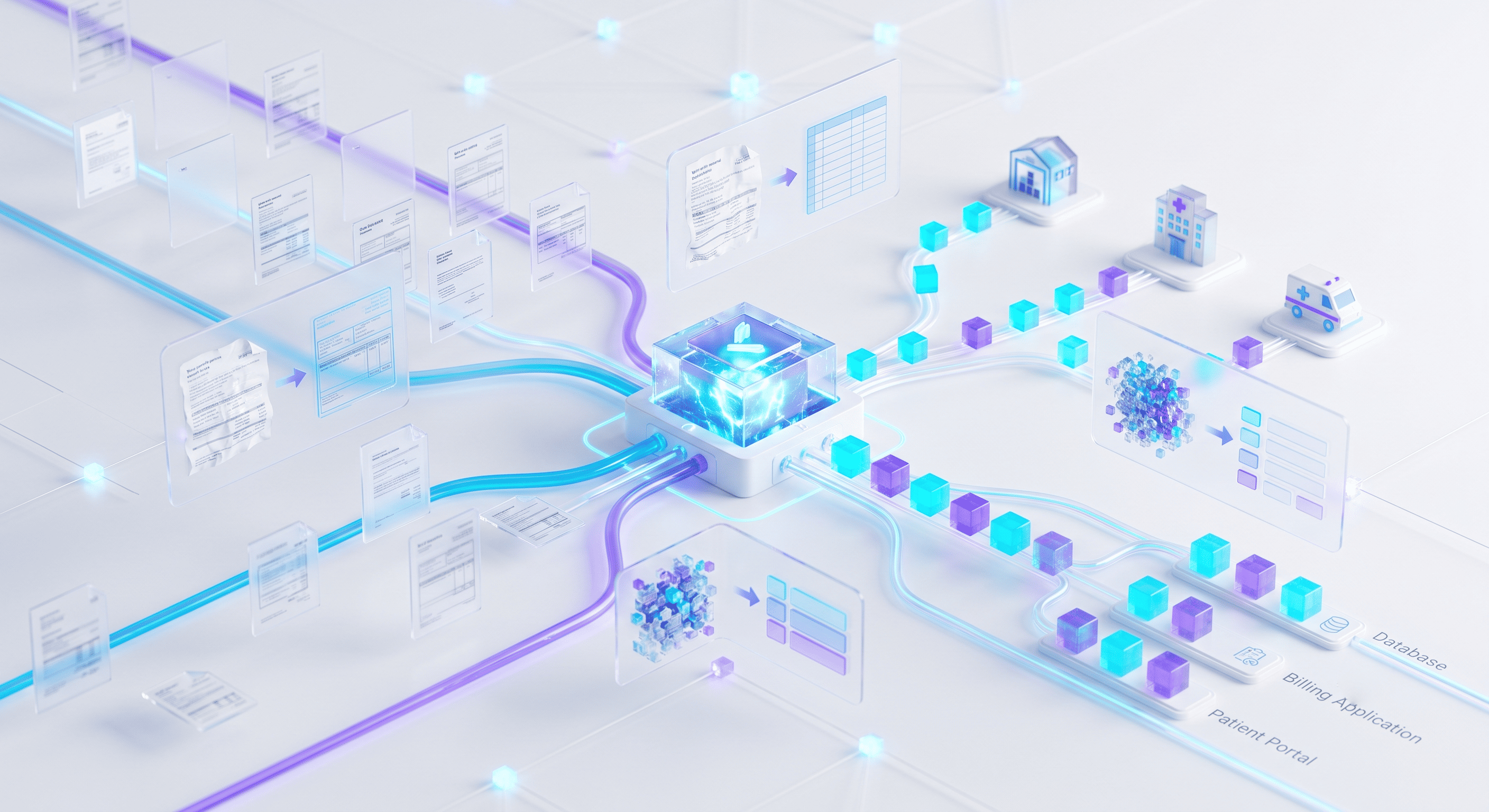
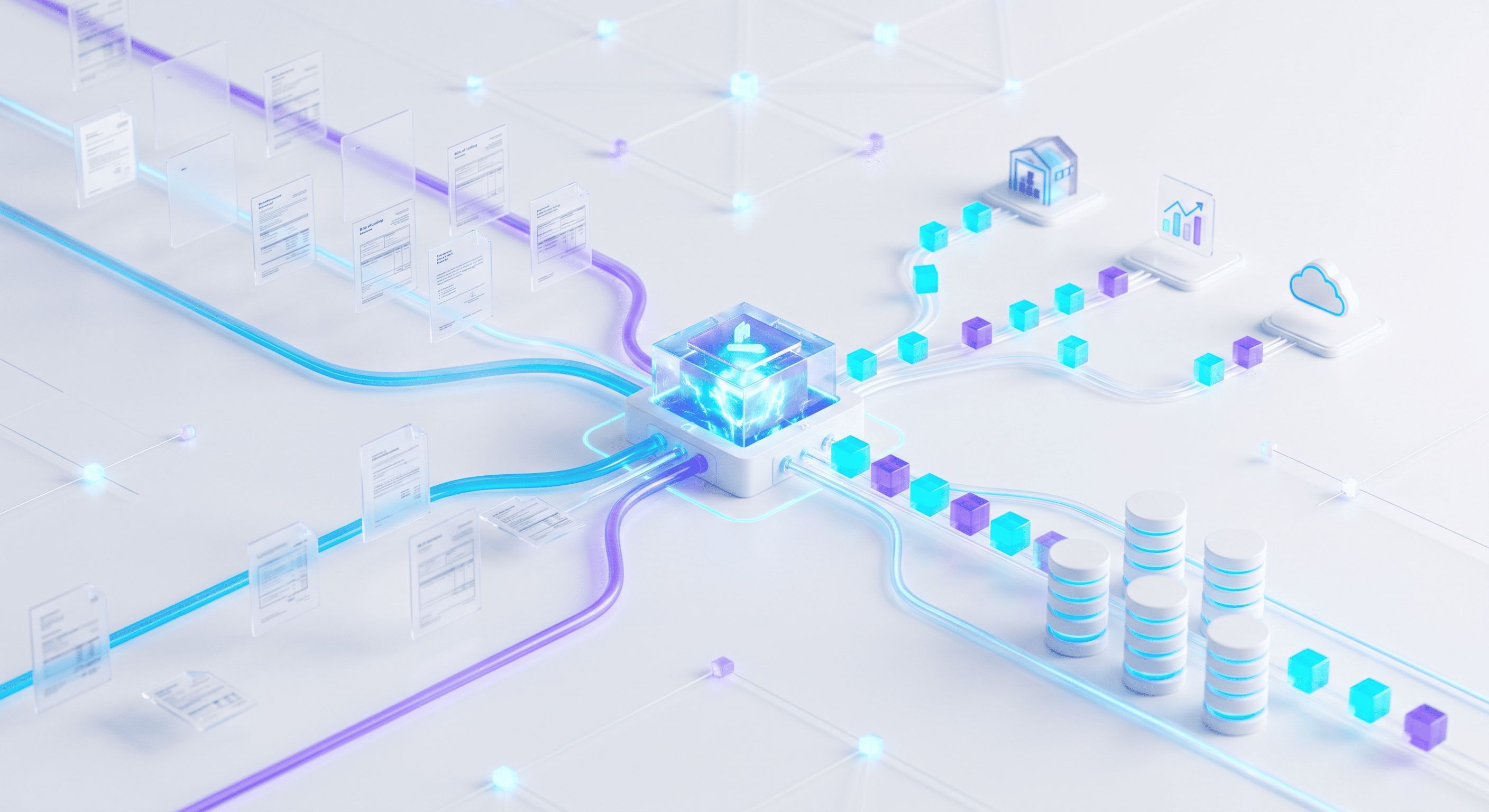
Phase 1: Autonomous Ingestion at the Edge The most efficient software is the software your team never has to open. Lymnus eliminates the manual upload process by intercepting documents exactly where they arrive. You can send your documents by email to a dedicated pipeline address, or auto-import them directly from connected apps like AWS S3, Box, Google Drive, or Microsoft SharePoint. Whether a truck driver uploads a photo of a POD to a shared folder, or a vendor emails a PDF invoice, Lymnus pulls it into the processing pipeline instantly and automatically.
Phase 2: Deep Extraction and Algorithmic Cleaning Once ingested, extraction is only the first step—not the whole job. Lymnus reads every document or file in any language, applying advanced extraction models to scans, photos, handwriting, or datasets. But raw extraction is useless without normalization. As a seamless step in the exact same pipeline, Lymnus cleans and merges your data on autopilot.
Deduplication: It automatically identifies and deletes duplicate invoices or redundant BOL submissions.
Normalization: It normalizes disparate dates and currencies into your preferred format, and standardizes vendor names (e.g., merging "acme corp" and "ACME CORP." into a single "Acme Corp" record).
Global Readiness: Supply chains are global, and so is our pipeline. Lymnus reads documents in 41 languages, meaning a supplier invoice in German or a receipt in Japanese is extracted into the same clean fields, in the language you actually work in.
Phase 3: Confidence Scoring and Headless Export Lymnus assigns a strict confidence score to every extracted field. If the system reads a vendor name with 99% confidence and a total amount with 98% confidence, it pushes that data straight through. When Lymnus is less than sure about a field—such as a heavily smudged total or a messy handwritten date—that specific document is routed to a review queue for a ten-second human check. You review exceptions, not everything.
Finally, the clean entries land exactly where you work. Using our native integrations or an API underneath it all (POST /v1/documents), Lymnus exports the structured data via webhooks directly to your TMS, ERP, Snowflake data warehouse, or PostgreSQL database.
What Does a Fully Automated Freight Reconciliation Look Like?
To truly understand the operational leverage Lymnus provides, let us walk through a tangible, real-world scenario of a global freight forwarder operating at scale. Imagine your logistics firm manages hundreds of cross-border shipments daily. Your team is tracking a complex maritime shipment originating in Hamburg, transferring in Tokyo, and terminating in Los Angeles.
Historically, this single shipment would generate a fragmented paper trail: a commercial invoice from the German supplier, a port handling receipt from Japan, and a final Bill of Lading in English. Previously, an operations manager would have to manually open each PDF, translate the relevant fields, convert the Euros and Yen into USD, and type every line item into a central tracking spreadsheet or your TMS. It was a slow, error-prone grind.
With Lymnus, this friction is entirely eliminated. The German invoice, the Japanese receipt, and the English BOL are simply auto-imported via email directly into your Lymnus pipeline. The platform instantly reads the 41 supported languages and translates the metadata into the structured, unified fields your database requires. It normalizes the dates to your standard format and standardizes the vendor names automatically.
Because logistics requires strict auditing, Lymnus is built for teams. Every action is recorded in a visual audit log. If an exception occurs—perhaps a forklift tire tread obscured the final weight on a physical POD scan—it goes to the review queue. The audit log clearly shows that Mike J. edited the invoice number, and Jennie S. verified the GL Code, allowing you to fear no mistakes and instantly revert incorrect data.
Once the data is clean, it is instantly exported to your downstream tools, pushing BOLs and PODs directly to your TMS, and routing financial data to QuickBooks or Xero. But the utility does not stop at extraction. Once the data is in, your team can use the built-in AI assistant to ask plain-English questions across everything your pipelines have processed. A manager can simply ask, "Find vendor invoices and flag any discrepancies in total amount," and receive an immediate answer without relying on complex formulas or manual exports. Furthermore, you can generate reports that build themselves, turning this processed data into charts and summaries to share with stakeholders.
Enterprise-grade security underpins the entire workflow, keeping your proprietary freight data locked down with SSO, SCIM, and IP allowlists.
Ready to Stop Typing Data Out of Documents Forever?
The era of treating highly skilled supply chain professionals as manual data parsers is over. Every hour spent manually transcribing a Bill of Lading is an hour stolen from strategic logistics planning and vendor negotiation. Your documents already contain the data you need to run your business; it is time to deploy a system that unlocks it autonomously.
Stop wrestling with legacy OCR tools that just create more work, and build a pipeline that seamlessly connects your inbox to your TMS. Lymnus gives you clean entries out, with no templates and absolutely no retyping required. Plus, we are committed to cleaner compute, pledging 1% of revenue to verified CO₂ removal at no extra cost to you.
Experience the immediate impact of zero-touch data extraction. Start free today—your first 10 documents are on us.